Moving to Miami Beach, FL
An island city of older condo buildings, with houses priced in the millions
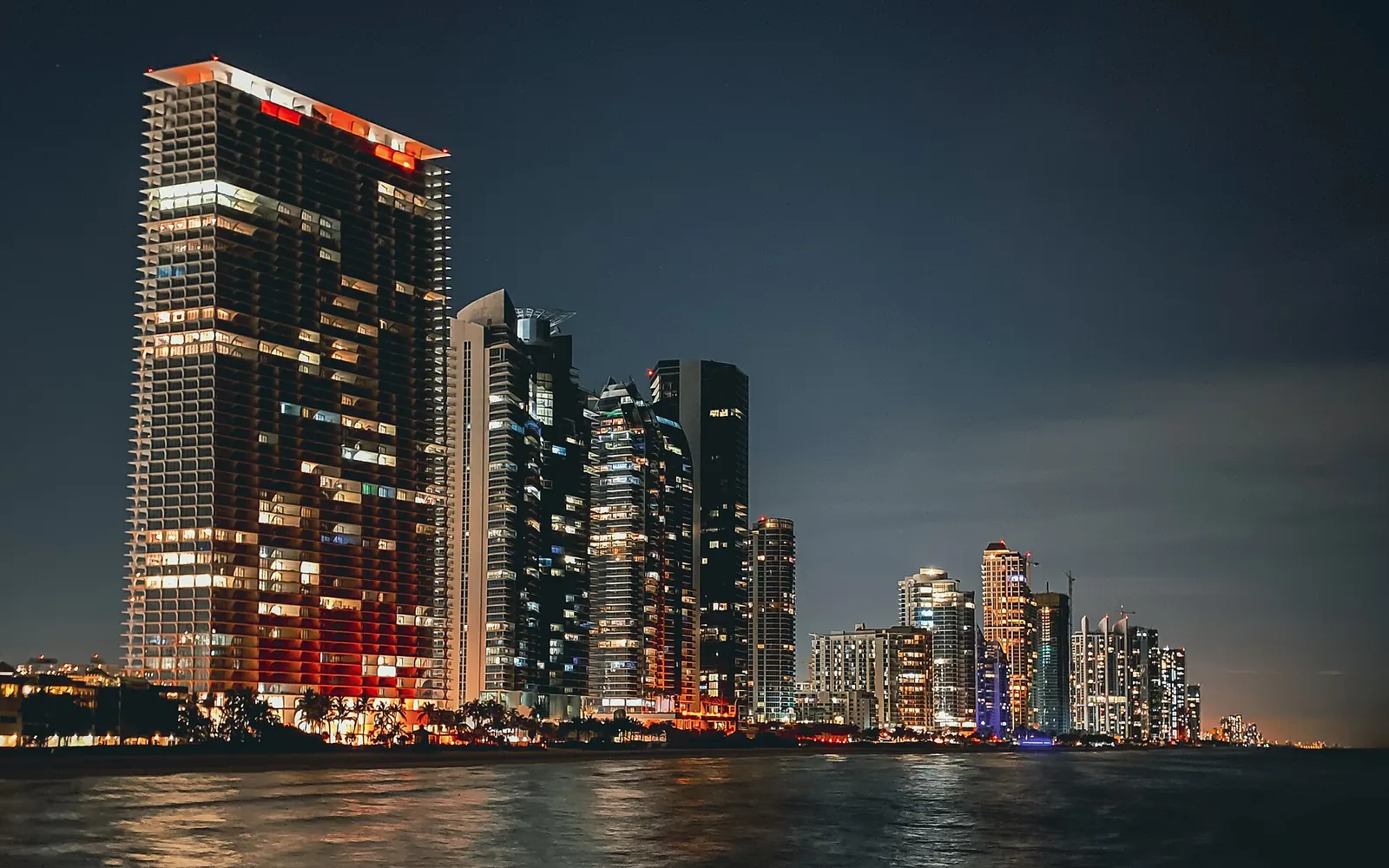
Miami Beach is a good place to live for buyers who want beach access, walkable streets and a condo-centered life, and who are comfortable with older buildings and flood management: Zillow's typical home there is about $530,649, while a single-family house runs about $2,457,421. That gap, more than four and a half times, sums up the city. Almost everyone who moves here buys a condo, and the few houses sit on islands and waterfront streets at prices few other Florida cities reach.
- Typical home value
- $531K Miami Beach, Zillow, September 2026
- Past year
- +1.8%
- Past 5 years
- +16.9%
- Lower third of the market
- $272K typical value
- Upper third
- $1.98M typical value
A separate city on a barrier island
Miami Beach is its own city of about 82,031 people on a barrier island across Biscayne Bay from Miami, plus a set of smaller islands in the bay. It has its own government, building department, police and tax rate. Four causeways connect it to the mainland: the MacArthur (I-395), the Venetian, the Julia Tuttle (I-195) and the John F. Kennedy Causeway at 71st and 79th Streets. Miami International Airport is a drive across the bay.
The city divides loosely into South Beach, Mid-Beach and North Beach. South Beach holds the Art Deco Historic District, Ocean Drive, Lincoln Road and the busiest nightlife. Mid-Beach has many of the larger oceanfront towers along Collins Avenue and residential streets near Indian Creek. North Beach is quieter and generally less expensive. Mount Sinai Medical Center is in the city.
Zillow Home Value Index, mid-tier, seasonally adjusted. Hover to see any date.
Data table
| Month | All homes |
|---|---|
| Dec 2012 | $294,473 |
| Dec 2013 | $354,692 |
| Dec 2014 | $401,256 |
| Dec 2015 | $429,254 |
| Dec 2016 | $428,350 |
| Dec 2017 | $412,803 |
| Dec 2018 | $411,322 |
| Dec 2019 | $404,019 |
| Dec 2020 | $409,825 |
| Dec 2021 | $470,567 |
| Dec 2022 | $560,158 |
| Dec 2023 | $562,415 |
| Dec 2024 | $547,923 |
| Dec 2025 | $522,135 |
| Sep 2026 | $530,649 |
What Census data says about the housing
Census data shows 78.5% of Miami Beach housing units sit in buildings with 10 or more units, and only 8.8% are detached houses. The median building dates to 1969, a decade older than Miami's. That age matters: a large share of the city's condo buildings are past 30 years old and subject to Florida's milestone inspections, Structural Integrity Reserve Studies and full reserve funding for budgets adopted on or after December 31, 2024. Many associations have raised fees or passed special assessments to meet them.
About 21.2% of homes are seasonal, and 18.8% of residents are 65 or older, with a median age of 42.9. Many buildings empty out in summer and fill in winter. That rhythm affects parking, restaurant crowds and how active a building's community feels in July.
- Palm Island$9.68M
- San Marino Island$8.74M
- Rivo Alto Island$8.68M
- Di Lido Island$8.52M
- Hibiscus Island$7.07M
- La Gorce$3.66M
- Nautilus$1.71M
- Biscayne Point$1.68M
- South Pointe$1.12M
- Belle Isle$972K
- Bayshore$970K
- Oceanfront$602K
Show all 16
- City Center$472K
- Isle of Normandy$446K
- North Shore$409K
- Flamingo Lummus$334K
Zillow neighborhood index, the 20 priciest of the largest neighborhoods.
- Rivo Alto Island+59.8%
- San Marino Island+50.6%
- Biscayne Point+48.9%
- Palm Island+42.9%
- La Gorce+42.2%
- Hibiscus Island+41.5%
- Nautilus+39.6%
- South Pointe+30.2%
- Di Lido Island+27.6%
- Belle Isle+26.6%
- Bayshore+19.4%
- Oceanfront+17.1%
- City Center+15.6%
- North Shore+11.2%
- Isle of Normandy+11%
Change in the Zillow index over 60 months.
- 1 bedroom$349K
- 2 bedrooms$728K
- 3 bedrooms$2.31M
- 4 bedrooms$3.56M
- 5+ bedrooms$7.37M
Zillow index by bedroom count, all home types.
- Coral Gables$1.57M
- Miami$584K
- Cutler Bay$563K
- Doral$549K
- The Hammocks$541K
- Miami Beach$531K
- Miami Gardens$474K
- North Miami Beach$453K
- Hialeah$444K
- Homestead$437K
- Aventura$423K
- North Miami$422K
- Fountainbleau$302K
Zillow index.
Cash you need to buy at $531,000
| All cash | Mortgage, 20% down | Foreign national loan, 35% down | |
|---|---|---|---|
| Down payment | $531,000 | $106,200 | $185,850 |
| Buyer closing costs | $4,180 | $10,041 | $9,604 |
| Total at closing | $535,180 | $116,241 | $195,454 |
Includes Florida doc stamps on the note ($0.35 per $100 borrowed), the 0.2% intangible tax on the mortgage, the lender's title policy, settlement and recording fees and typical lender fees, plus the owner's title policy, which Miami-Dade buyers usually pay. Excludes prorated taxes and HOA. For your exact numbers use the closing cost calculator.
Prices by size and by neighborhood
Zillow's bedroom figures show how fast prices climb: about $348,517 for a 1-bedroom, $727,965 for a 2-bedroom and $2,308,466 for a 3-bedroom. The jump from two to three bedrooms is the jump from condos to houses. The lower third of the market sits around $271,910, so small studios and 1-bedrooms in older buildings remain accessible.
- Flamingo Lummus (South Beach): about $334,397 (1y -0.5%, 5y 10.0%)
- North Shore: about $408,654 (1y -0.1%, 5y 11.2%)
- City Center: about $471,647 (1y 2.1%, 5y 15.6%)
- Oceanfront: about $602,013 (1y 3.1%, 5y 17.1%)
- South Pointe: about $1,116,859 (1y 4.7%, 5y 30.2%)
- La Gorce: about $3,656,034 (1y 5.6%, 5y 42.2%)
The overall five-year gain is 16.9%, less than half of Miami's 40.1%. The older condo districts grew slowly while the house and island neighborhoods rose sharply. The Venetian islands of Di Lido, Rivo Alto and San Marino all sit above $8 million.
Flooding, insurance and the city's response
Miami Beach sits low, and some streets flood during seasonal high tides as well as storms. The city has spent years raising roads, installing pumps and upgrading drainage, and the work continues. For a buyer, the questions are about the specific building: its elevation, whether the lobby and garage have flooded, where the electrical equipment sits, and how the association has planned for storms.
Most of the island falls in high-risk flood zones. Ask for the building's flood coverage and the master policy's wind deductible, and carry loss assessment coverage on your HO-6 policy. For a house, get an elevation certificate, a flood quote and a wind quote during the inspection period, and ask about the seawall if the lot is on the water.
Taxes and the seasonal-owner question
Florida has no state income tax. A buyer who makes Miami Beach a permanent residence can claim homestead, worth up to $51,411 off assessed value in 2026, with increases capped at 3% or CPI. With one in five homes used seasonally, many buyers here will not qualify. Part-year owners pay tax on the full assessed value, and their only protection is a 10% annual cap on the non-school portion of the assessment. On a $727,965 two-bedroom, that difference is large enough to change the monthly budget. Canadian buyers who winter here should confirm their day counts with a cross-border tax advisor, since the IRS substantial presence test and Form 8840 apply. This isn't legal or tax advice.
Assessments reset on purchase. A seller who bought decades ago may show a tax bill far below what you will pay, so ask for an estimate at your price.
What newcomers misjudge about Miami Beach
The most common surprises: parking costs and limits in older buildings without garages, event weekends that close streets, the summer slowdown, and association fees that have risen sharply since 2022. Buyers also underestimate how much the building, more than the street, decides their costs. Two condos a block apart can have very different reserves and assessments.
Miami Beach suits buyers who want to walk to the beach, restaurants and shops, and who are comfortable in a condo. It suits less well buyers who want a house under $1 million, quiet streets year-round or newer construction. If the island is your choice, the efficient path is a shortlist of buildings screened for reserves, inspection status and fees before you tour.
What buyers ask me
Is Miami Beach a good place to live?
For buyers who want beach access, walkability and condo living, yes. The trade-offs are older buildings with rising fees, flooding on some streets, tourist crowds and very high house prices.
How much does it cost to buy in Miami Beach?
Zillow's typical values are about $460,054 for a condo and $2,457,421 for a single-family house. A 1-bedroom averages about $348,517.
What are the pros and cons of living in Miami Beach?
Pros: the beach, walkable neighborhoods, restaurants and no state income tax. Cons: flood risk, insurance and association costs, parking, event traffic and a large seasonal population.
Is Miami Beach part of Miami?
No. Miami Beach is a separate city with its own government, taxes and building rules, connected to Miami by causeways.
What should I know before moving to Miami Beach?
Check each building's reserves, milestone inspection, assessments and flood history, and budget for insurance and fees. Ask for a tax estimate at your purchase price.

Get a shortlist that fits your budget
Tell me what you're looking for and I'll send real listings with the full cost of owning each one: HOA or condo fees, property tax at your price, insurance, and closing costs. No newsletters, no pressure.
- MLS listings, including ones that just hit the market
- Condo budget, reserves and inspection history checked before you offer
- Fully remote if you need it: video tours, e-signing, wire to escrow
Or reach me directly: (754) 203-9632 · [email protected] · WhatsApp on the same number
Check the costs yourself
Data: Zillow Home Value Index (ZHVI), Zillow Research, latest month September 2026; U.S. Census Bureau, American Community Survey 2020–2024 5-year estimates. Figures for small areas carry margins of error. These are planning numbers, not an appraisal of any property.